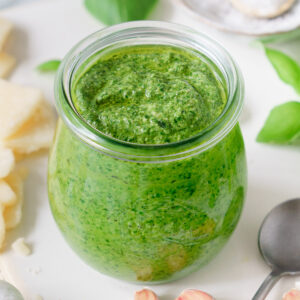
Nut Free Pesto
This delicious nut free pesto is a wonderful alternative to pine nut-heavy Pesto alla Genovese. All you need is a few wholesome ingredients, a food processor, and a couple of minutes to create this rich and flavorful sauce!
Servings: 1 cup
Calories: 66kcal
Ingredients
- 2 cups fresh basil leaves - note 1
- 6 tablespoons extra virgin olive oil - note 2
- 2 garlic cloves - note 3
- 6 tablespoons grated parmesan - note 4
- 3 tablespoons sunflower seeds - note 5
- A pinch of sea salt
- 3 ice cubes - or 3 tablespoons icy water - note 6
Instructions
- Wash the basil leaves, and dry them with a towel, making sure not to press too hard to avoid causing oxidation.
- In a food processor, add the grated Parmesan, garlic (note 3), basil leaves, salt, extra virgin olive oil, and ice cubes (if using) and blend until creamy.
- If needed, scrape the side of the food processor to make sure everything is nice and smooth.
- Taste and adjust seasoning if needed.
- Transfer in a jar. Top it with a thin layer of olive oil to prevent it from browning. Refrigerate until ready to use. This pesto can last in the fridge for a couple of days (note 7). If you want to keep it for longer, you can freeze it for up to three months.
Notes
Note 1 - Basil: You’ll want to use, if possible, the freshest, small basil leaves you can find. If you find it, opt for Italian basil (Genovese basil). It has tender, small, light green leaves.
Note 2 - EVOO: Use the best quality Italian Extra Virgin Olive oil. Use a delicate and light extra virgin olive oil. If you can find it, Ligurian olive oil is best for pesto.
Note 3 - Garlic: As we’re using raw garlic, try to use a sweet variety. It’s best to cut the cloves in half and remove the germ (the center of the garlic clove), as it can develop a bitter taste and it’s less digestible.
Note 4 - Parmesan: Make sure to use high-quality Parmigiano Reggiano DOP. Real Parmesan cheese from Italy is made from grass-fed cows without any additives. Original pesto uses a combination of Parmesan cheese and pecorino. If you can find it, sub two tablespoons of grated parmesan for pecorino.
Note 5 - Sunflower seeds: Sunflower seeds give this pesto extra creaminess. If you don't have them handy, you can sub for an extra 2 tablespoons of parmesan.
Note 6 - Ice: This is one of the best tricks: when you blend the basil leaves in a food processor, the leaves will break, and the blades will heat, causing oxidation. This will make the pesto turn brown quite quickly. Adding ice cubes will slow oxidation, giving your pesto a bright green color for longer.
Note 7 - Storage tips: If your basil pesto develops a brown layer on top, don’t worry. This is normal oxidation. Once you mix it into your pasta, it will turn green again. Wait until the last minute to mix it, and do not heat it. If you freeze it, let it thaw in the refrigerator or at room temperature.
*Nutrition information is a rough estimate per tablespoon.
Nutrition
Serving: 1tablespoon | Calories: 66kcal | Carbohydrates: 0.8g | Protein: 1g | Fat: 6g